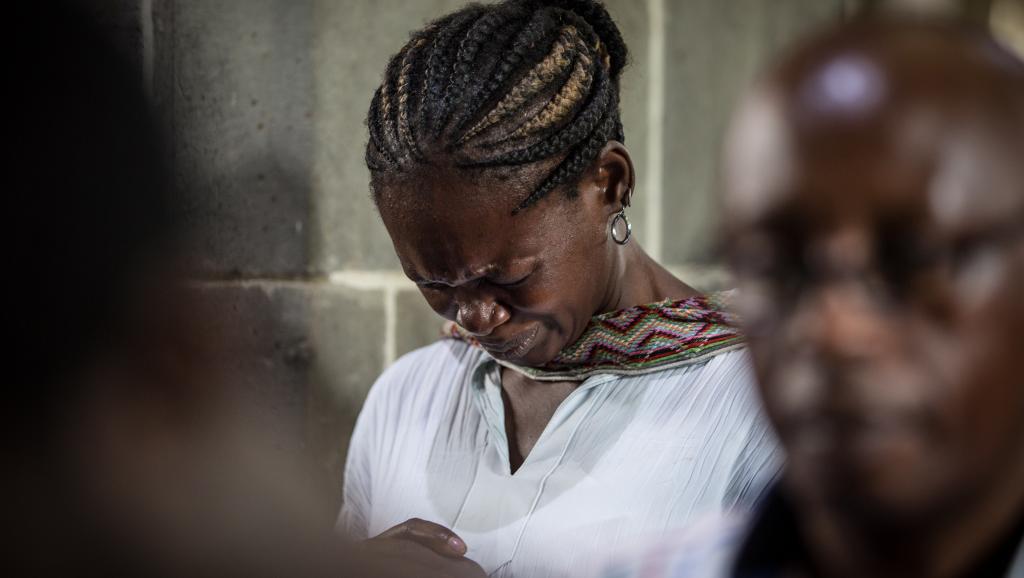
Survivors of Kenya’s 2015 Garissa University attack, which killed 148 people, have welcomed a life sentence imposed on an Islamist militant for the massacre. But some regret that his two accomplices did not receive the same punishment. After a long drawn out trial, many are eager to move on.
For many survivors of the Garissa University College attack, Wednesday’s verdict was about closure.
After waiting more than four years for the attackers to be sentenced, on Wednesday, they finally were.
Tanzanian national Rashid Charles Mberesero was given life imprisonment while Kenyans Mohammed Abikar and Hassan Edin Hassan were jailed for 41 years each.
The sentences are harsh for a country where high profile cases are often botched. But for 24-year-old student Rachael Munjiru Gikonyo, they do not go far enough.
“I think they should have been sentenced to life, because they also aided to kill people. They should also suffer in jail,” she told RFI.
Garissa youths ran for their lives and witnessed fellow students slaughtered when al-Shabaab jihadists stormed their university on 2 April 2015.
“I was in a prayer room, me and my colleagues,” recalls Gikonyo, a sociology student. “We were praying, and then all of a sudden, those terrorists banged the door open. They entered and started spraying bullets.”
She was wounded and lost her ability to walk. Today, she uses a wheelchair.
Open wounds
The wounds are fresh too for psychologists who assisted students after the attack.
“Our own staff that were working with the students were traumatised,” explains Mary Mahugu, a psychologist at Moi University in Eldoret, outside Kenya’s capital of Nairobi.
The bulk of Garissa students were relocated to her establishment to finish their education.